AIRITATION ®
Air drainage systems ®
The concept of air pollution in Tocnology3 refers to gaseous (Greenhouse gases) and heat pollutants resulting from human or non-human activity, represents the biggest challenge of the problem of climate change, and treatment is carried out using innovative AIRITATION® systems consisting of:
The network:
Through it, gaseous and thermal pollutants are continuously collected from everywhere: homes, streets, parking lots, factories, etc.

The network contains sensors that detect the presence of air or heat pollution, and then valves are opened to draw the pollution towards the station.
The Station:
The treatment is done simply and directly through four steps as follows:

1- Pumping and vacuuming:
In it, pumps3 work to empty the network of pollutants and compress it strongly for the next steps.
2- Concentrating:
In it, the air is compressed at a ratio of more than 1:1000 to concentrate pollutants, whether gaseous or thermal.
3- Exchange and cooling:
In this step, heat exchange takes place, and from it heat harvesting can be carried out. The flow must exit from it cold to the filter.
4- Filtration:
There are two types: either wet (with liquids such as water) or dry (which is better) and it gives a continuous flow of solid products.
Decentralized systems:
A medium-scale (or decentralized) Airitation system can be implemented, for example, for a factory or industrial area, through a chimney exhaust project called a Schimney® (safe chimney). This system is easily integrated with the factory's chimneys, allowing for the direct and continuous extraction and treatment of pollutants. Recirculation can also be implemented to improve combustion processes. as follows:

Special systems:
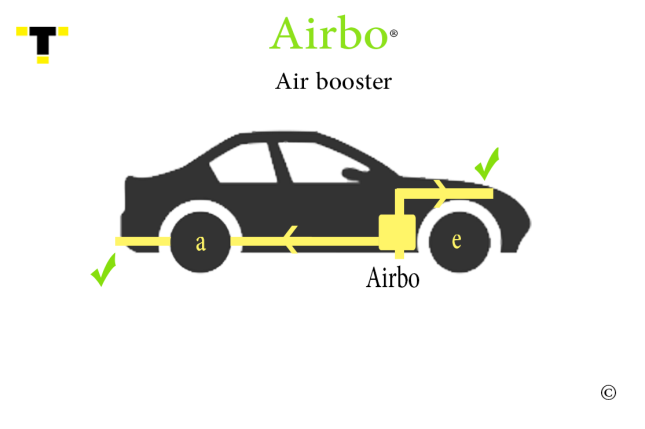
A small-scale (or special) of Aritation system can be developed, and a best example is the innovative Airbo® (Air booster) system for machinery and vehicles. This system is easily integrated with vehicle exhaust systems to harvest and continuously treat gaseous and thermal pollutants (with the possibility of using them for other purposes such as home heating or water heating, etc.) by using the Airbo-a type. It can also be integrated with vehicle engines to increase efficiency and improve combustion processes (performing a function similar to current turbo technology) by using the Airbo-e type. As follows: