Modern Water Screw

MWS®
The water screw (Archimedes' screw) or (let's call it here the Old Water Screw OWS) is a water technology that is more than 2000 years old, but because of its genius, it still inspires us and uses to this day in tasks of lifting water or generating electricity. The largest of them reached to more than 95 tons, 22 meters long, and 4.3 meters in diameter, as in the Diepenbeek station in Belgium.
This screw (As a proven concept technology) is chosen to be the first technical challenge in our journey, and how we can redevelop and rehabilitate it according to Tocnology3 to create an innovative modern water screw system, or what so-called Modern Water Screw (MWS) ®, with a new and different functional role.
Here we will discuss the first release of a single-type one called MWS-mono-v1.0
The system:
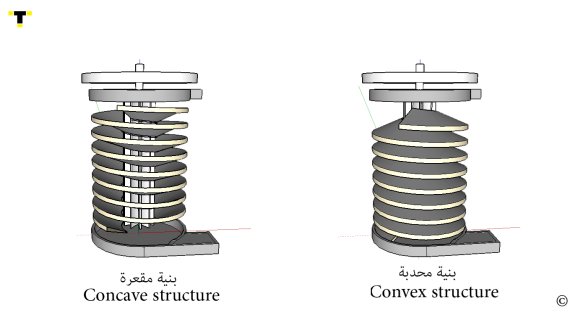
Unlike the old OWS screw, our modern MWS screw operates with a fixed (non-rotating) spiral path (blade) and consists of two main parts as follows:


1- Outer fixed part (the bolt:(
It consists of a fixed spiral path called the bolt and can be achieved in its various flat or non-flat (concave or convex) structures to achieve important concepts such as the concept of central or peripheral (external) pressure flow.
2- Inner rotating part (the screw:(
It typically consists of an innovative three-dimensional centrifugal impeller called a T-Impeller, often connected to a flywheel3 (which provides the necessary torque), and achieving the concept of a screw.
Like any impeller, it has three main types based on its construction: closed, open, or semi-closed. It also includes an intermediate support rings, which can be closed or open depending on its function (e.g., pump or turbine).
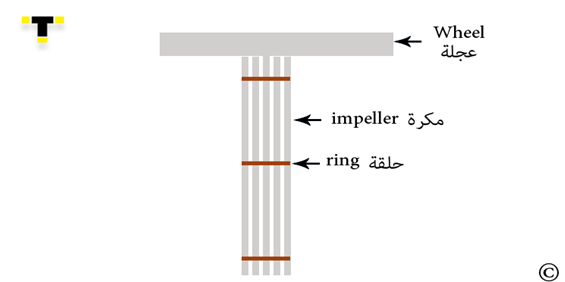
They are also classified according to their driving force into three types as follows:

How does the modern MWS screw work?
A modern water screw MWS, depending on its function (pump or turbine), operates in two main methods:
- The expulsion method (from center to periphery) Active flow: The rotor (central impeller) rotates smoothly, directing the flow horizontally by centrifugal force from the center towards the periphery (towards a fixed spiral track). This track then receives the flow and directs it vertically (up or down) towards the pump outlet, As a high torque and speed rotated flow (flow3).
- The attraction method (from periphery to center) Passive flow: Driving forces, primarily side-far ones, are employed through technologies as Rotating Rings (RR) ®. rotate the flow from the periphery (towards a fixed spiral track). The track then receives the flow and directs it vertically (up or down) and towards the center, ultimately causing it to flow from the pump or turbine outlet as a high torque and speed rotated flow (flow3). leads to the realization of new and important concepts such as Water Lever® WL and Water Gears® (WEARz) and the concept of Remote Flow Management® (RFM).
Calcs:
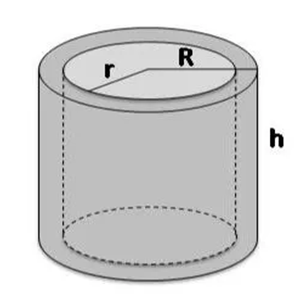
MWS has two diameters, R,r, inner and outer; the flow is calculated from the equation:
Q= (π R² h/cons) *rpm
Q: flow by m3/minute.
R: outer radius by meter.
h: height of the MWS by meter.
Cons: constant depend of Q kind, for example if Qk is mono cons= Number of spiral track rounds, if Qk is poly cons=1.
Rpm: revolutions per minute.
OWS Vs. MWS
|
MWS |
OWS |
|
|
year2026 |
2000Years |
Old |
|
Slow-fast |
Slow |
Speed |
|
Weak-Medium |
High |
R.Torque |
|
High |
Weak |
P.Torque |
|
High |
Low |
Flow |
|
Heavy - Light |
Heavy |
Weight |
|
Small-Large |
Large |
Size |
|
Total-Partial |
Total |
Occupation |
|
Vertical - Horizontal |
Inclined |
Deployment |
|
Closed |
Open |
System |
|
High +H, - H |
Low or Not |
Pressure |
|
Single - Multi |
Single |
Path |
|
Simple - Complex |
Complex |
Structure |
|
Easy |
Difficult |
Maintenance |
|
Low |
High |
*Consumption |
|
High |
Low |
**Output |
|
Pump-Compressor |
Pump |
Function |
|
Water-power |
Water-power |
Using |
|
Direct-Remote |
Direct |
Flow manage |
* The amount of electrical energy or water flow required for its rotation.
** Output: Electrical energy or water flow.
3in1
MWS technology is a development and integration of three important technologies:
- Screw (Inspired).
- Centrifugal (Popular).
- Piston (Reliable).
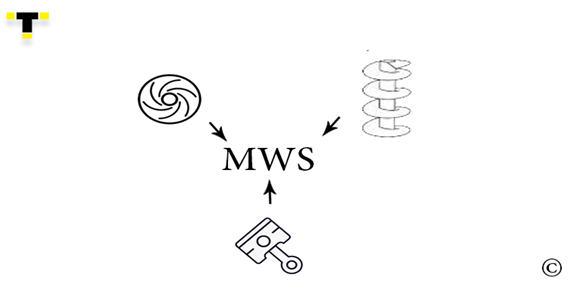
As a result, we will have a new technology that is inspiring, popular, and reliable all at once.
Applications:
The modern screw, with its innovative structure, is a high-performance water pump that can operate powerfully in different vertical or horizontal positions, in different sizes (large, long, or small, short), and at different levels underwater (as a submersible) or even above water. It can be used in many applications and various systems, including ground compressors, rapid pumping, deep drainage (DD) and Flow3 system.

It is also used in the energy sector as a highly efficient generating turbine or as a driving force in closed generation systems. See Mountain power or plant3.
Power:
The modern screw MWS, with its innovative structure, is considered an important technology with high efficiency. It can be operated by all energy resources, including traditional, renewable, and even newable®, in different systems including internal (integrated) or external, and in different ways including direct (such as direct rotation by wind and water energy, etc.) and indirect (with electric rotation technologies, such as motor3, with high feasibility).
Conclusions:
- MWS can operate with or without Tocnology3 standards, meaning high or low speed (S), torque (T), and flow rate (Q).
- Tocnology3 enhances and upgrades OWS, opening new horizons for modern competition and renewing its functional role, which includes torque, speed, flow rate, cost, size, and range.
- MWS specifications are incomparable to OWS.
- OWS functions as a pump, while MWS acts as both pump and compressor.
- The ability of MWS to build high-pressure H+ and H- compressors enables it to achieve vertical and horizontal pumping (compressing) to great heights and distances.
- It can achieve Active/Passive Flow and it can also achieve Remote Flow Management®(RFM).
- It achieves large inlet (pump eye) and outlet sizes that may reach or exceed the overall (outer) diameter.
- The inlet and outlet can be horizontal, vertical, or even in a horizontal-vertical configuration.
- MWS as a high efficiency turbine enables it to operate in various environments and conditions.
- The reliability of MWS in operation depends on several factors, the most important are the applied speed and torque.
- It can represent an alternative system to automatic pumping systems such as the Ram pump.
- One of the most powerful technologies for building rotated flow systems (Flow3).
- Its energy efficiency can reach up to 97%.
- Building large-scale Mega-pump projects.
- Achieving environmentally friendly systems.
- Achieving tremendous water thrust.